AI Receptionist Costs in Canada: $100 to $500 a Month
See what AI receptionists cost in Canada, compare plans starting at $50 a month, weigh AI against human staffing, and estimate a monthly budget.

Most AI receptionist plans run between $100 and $500 per month for small and mid-sized businesses, with enterprise deployments climbing higher depending on call volume and features. That range sits well below the loaded cost of a part-time or full-time human receptionist, whose median wage alone runs $21.00 per hour in Canada. We built Callspace around that gap, and the rest of this guide shows you exactly where your business is likely to land.
TL;DR:
- Entry plans cost $50 to $150 monthly and limit minutes or coverage; mid tier adds 24/7 service and integrations, while enterprise adds dedicated capacity.
- Per minute billing suits variable demand, per call pricing favors brief transactions, and flat monthly plans can impose fair use limits or overage fees.
- Estimate cost from total call minutes, not call count, because long conversations, transfers, lookups, and summaries increase billed time; check rounding and add on fees.
- Use one to three months of call logs to calculate minutes, add a 15% to 25% buffer, then test the estimate in a free trial.
- Before signing, verify cancellation terms, number porting fees, overage rates, rounding rules, integration fees, compliance support, data exports, and onboarding timelines, which can add costs.
Table of Contents
- Pricing at a glance: representative plan tiers and ranges
- How AI receptionist pricing models work
- What drives your bill (practical cost drivers)
- AI receptionist vs a human receptionist: a Canadian cost comparison
- How to estimate your monthly plan: a simple step-by-step method
- Buyer checklist: what to check in pricing and contract fine print
- Why Callspace: predictable costs, fast deployment, and compliance support
- Author perspective: quick budgeting tip from a deployment lead
- See Callspace pricing and start a trial
- FAQ
- Sources
Pricing at a glance: representative plan tiers and ranges
Vendor pricing in this category tends to cluster into three bands, and knowing which one fits your call volume saves you from overpaying or getting stuck with a plan that throttles you during busy months.
- Entry tier: Typically $50 to $150 per month, covering limited monthly minutes and business-hours answering only.
- Mid tier: Usually $150 to $400 per month, adding more included minutes, 24/7 coverage, and basic calendar or CRM integrations.
- Enterprise tier: Often $400 and up, bundling dedicated assistants, custom integrations, and service-level agreements for response time and uptime.
Most providers offer a free trial period before billing starts, and you will find meaningful differences between monthly and annual billing: annual commitments often shave a noticeable percentage off the monthly rate but lock you into a longer term. Before you commit to either, map your actual call patterns against these tiers rather than guessing from the sticker price alone.
How AI receptionist pricing models work
Four billing structures dominate this market, and each one rewards a different kind of call pattern.
- Per-minute plans charge for actual talk time, which suits businesses with unpredictable or seasonal call volume. If your assistant handles a given number of minutes at a typical blended rate, your bill scales directly with that usage, so slow months cost less and busy months cost more.
- Per-call plans charge a flat fee per completed call regardless of length, which works well for short, transactional calls like appointment confirmations. Watch for rounding rules and minimum-charge thresholds that can inflate costs on very brief calls.
- Flat monthly or unlimited plans offer predictable billing, which appeals to businesses that want one number to budget against. The trade-off is a fair-use policy buried in the contract that can cap your actual usage or trigger overage fees once you cross it.
- Dedicated or per-seat plans reserve a specific assistant instance for your business, typically for higher call volume or when you need guaranteed capacity during peak periods. These run at the top of the pricing range but remove the shared-resource variability of lighter plans.
Match the model to your call shape before you match it to the lowest sticker price.
What drives your bill (practical cost drivers)
A handful of concrete factors move your monthly total up or down, and most of them are things you can ask a vendor about before signing anything.
- Call volume and average handle time: More calls and longer conversations mean more billed minutes on any minutes-based plan.
- Feature-driven minutes: Live transfers to staff, order or account lookups, and detailed call summaries all add processing time that counts against your plan.
- Add-on charges: Integrations with your calendar or practice management system, compliance support, number porting, and onboarding fees often sit outside the base subscription price.
- Billing policies: Rounding rules, per-minute overage rates, and monthly minimums can quietly push a seemingly cheap plan above a flat-rate competitor.
The core driver to watch is minutes, not calls. A single long, complex call can consume the same billed time as five short ones, which is why average handle time matters more than raw call count when you are benchmarking labor and service costs against an AI plan.
AI receptionist vs a human receptionist: a Canadian cost comparison
A human receptionist’s wage alone does not tell the full story, but it is the right starting point for comparison. Job Bank reports a national median wage of $21.00 per hour for receptionists in Canada, with a range from $16.25 to $29.00 depending on region and experience.
Here is a simple, wages-only illustration, with no benefits, payroll taxes, or turnover costs included:
Those wage figures exclude benefits and overhead, which push the real cost of a human hire higher still. What the table does not capture is coverage: a human receptionist cannot staff phones overnight or during a lunch break the way an always-on assistant can, and that consistency carries its own value for businesses that cannot afford a missed call.

How to estimate your monthly plan: a simple step-by-step method
Building a realistic budget takes less effort than most business owners expect, and you can do it with data you likely already have.
- Pull your current call logs for the last one to three months and note total inbound calls and average handle time per call.
- Calculate monthly minutes by multiplying total calls by average handle time; for example, 600 calls at 3 minutes each comes to 1,800 minutes.
- Add a growth buffer of roughly 15% to 25% to account for seasonal spikes or business growth over the plan term.
- Match your buffered total to a pricing model, checking whether a per-minute plan or a flat-rate tier lands closer to your actual spend, and ask about add-on costs for integrations or compliance support.
Pro Tip: Run your estimate against a vendor’s free trial before signing a long-term contract, since actual call patterns often surprise even experienced office managers.
Buyer checklist: what to check in pricing and contract fine print
The published price is only part of the real cost. Before signing, confirm the following:
- Minimum term and cancellation terms, including any early-termination fee.
- Porting and number fees for moving your existing business line onto the new system.
- Overage rates and rounding rules that apply once you exceed included minutes.
- Compliance support and data export, including whether the vendor provides a data protection agreement and caller-data export tools, which matters under PIPEDA guidance for AI voice agents.
- Included features, such as call transcripts, calendar or CRM integrations, escalation workflows, and reporting dashboards.
- Onboarding timeline and support level, since a slow setup process adds hidden labor cost even when the subscription itself is cheap.
Why Callspace: predictable costs, fast deployment, and compliance support
We built Callspace around the two things that actually determine your real cost: how fast you get running and how much risk you carry once you are live. Our Basic and Team plans cover appointment booking, order lookups, and 24/7 answering, with every call transcribed for quality review.
- We typically get small teams live quickly, which can help limit implementation labor costs.
- Our compliance features support regulated industries, including insurance agents and healthcare practices working under PHIPA and HIPAA.
- Every call comes with a full transcript, which gives you an audit trail without extra setup.
- Escalation workflows hand off complex calls to your staff with context intact, so nothing gets lost between automated and human service.
Author perspective: quick budgeting tip from a deployment lead
Based on deployments we have observed across clinics and service businesses, the biggest budgeting mistake is sizing a plan off a guess rather than a pilot. Run a pilot using real call data before you commit. Call flows can be tuned to actual volume.
— Sam
See Callspace pricing and start a trial
Once you know your rough monthly minutes, the next step is simple: check our pricing page, which lists our Basic plan at $150 per month and our Team plan.
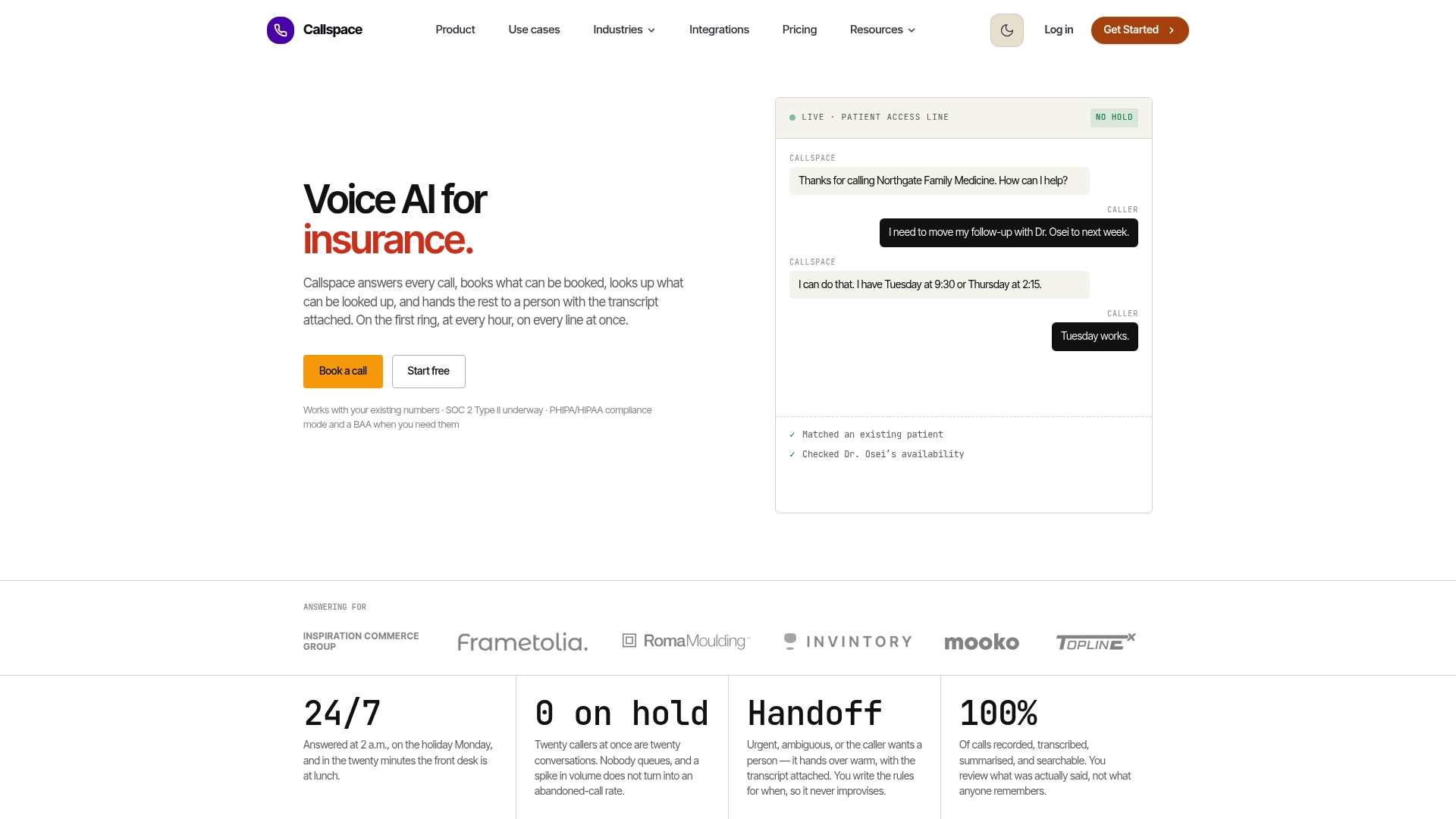
If your call patterns are unusual or you run a regulated practice, our team can build a custom estimate around your compliance needs. Measure your first few weeks of real traffic, and adjust from there rather than committing to a tier based on guesswork.
FAQ
How much does chat AI cost to use?
Chat-based AI tools are usually priced separately from voice receptionist plans, often available for a monthly fee, with pricing varying by provider and features. Voice-based AI receptionist plans, which handle phone calls rather than text chat, typically start higher, in the $50 to $150 monthly range for entry tiers.
How do you make an AI receptionist?
Building an AI receptionist from scratch requires voice recognition technology, call routing logic, and integration work with your calendar or business systems, which is a significant technical undertaking for most businesses. Most companies instead subscribe to a platform like Callspace that handles the setup and integrations as part of a monthly plan.
Are AI receptionists worth it?
For businesses with steady or growing call volume, AI receptionist plans often cost significantly less per month than the wages-only cost of a human receptionist, whose median wage alone runs $21.00 per hour in Canada. The value depends on your call complexity and whether round-the-clock coverage matters to your business.
What is the average cost of an AI agent?
Monthly costs for AI receptionist agents typically fall between $100 and $500, depending on included minutes, features, and whether you choose a per-minute, per-call, or flat-rate plan. Enterprise deployments with dedicated assistants and custom integrations often run higher than that range.
Sources
- Total compensation per job, by NAICS industry, inactive
- Receptionist in Canada | Wages - Job Bank
- PIPEDA + AI Voice Agents — A Canadian Small Business Guide (2026)